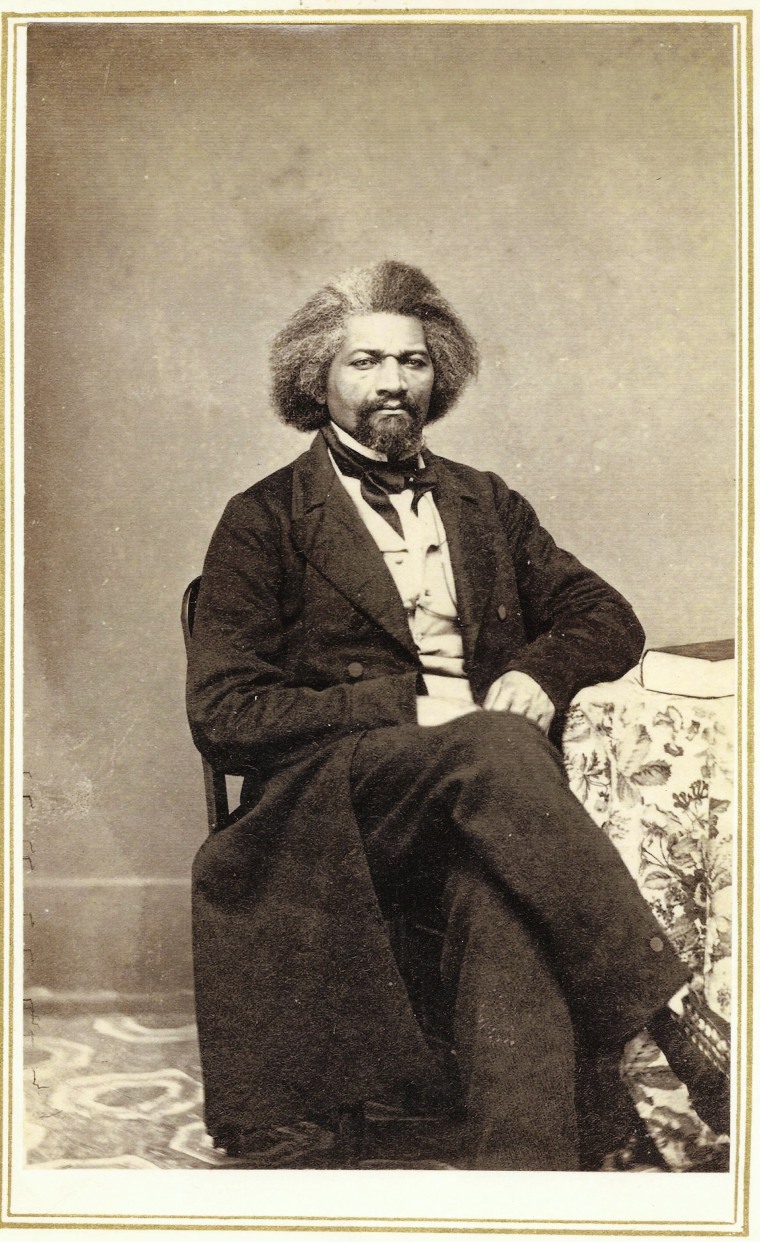
Frederick Douglass: The Voice That Shattered America's Conscience
Frederick Douglass didn't just escape slavery. He became its most eloquent enemy, wielding words as weapons against an institution that had tried to silence him forever.
Born into bondage around 1818 in Maryland, Douglass couldn't even tell you his exact birth date. Slaveholders deliberately withheld such basic information from the people they enslaved, treating them no better than livestock. But what slavery tried to take from him, Douglass would reclaim through sheer force of will and intellect.
His path to freedom began with the alphabet. His mistress taught him the alphabet but the husband was against it. When his mistress started teaching young Frederick to read, her husband quickly intervened. Learning, he declared, would make Douglass "unfit to be a slave." In that moment of intended cruelty, Douglass found his roadmap. He understood that knowledge was the bridge between bondage and liberty.
He was dedicated to learn how to read as it was the key to his freedom. Douglass traded bread with poor white children for reading lessons. He devoured every text he could find. Once his mind awakened to the power of ideas, no chain could truly hold him. This is the paradox of slavery that Douglass would later articulate: education and enslavement cannot coexist.
In 1845, Douglass published his autobiography, detailing the brutal realities of slavery. The narrative became an instant bestseller, selling 5,000 copies in just four months. In his autobiography he talked about the horrific actions and the brutality he had seen in his years of slavery. He described witnessing his aunt whipped until her back ran with blood. He recounted families torn apart with the same casual cruelty used to separate livestock. His firsthand accounts stripped away any romantic notions about the "peculiar institution."
But Douglass's most devastating critique came in his 1852 address, "What to the Slave is the Fourth of July?" Delivered in Rochester, New York, the speech exposed American hypocrisy with surgical precision. While white Americans celebrated freedom, millions of Black people remained in chains. The celebration, Douglass declared, was nothing but a sham.
"What, to the American slave, is your Fourth of July?" he asked. "A day that reveals to him, more than all other days in the year, the gross injustice and cruelty to which he is the constant victim." His words didn't whisper—they thundered. America could not claim the mantle of liberty while practicing slavery. The contradiction was too glaring, too obscene.
Douglass understood something profound about slavery: it corrupted everyone it touched. The institution didn't just brutalize the enslaved; it transformed slaveholders into tyrants, hardening hearts that might otherwise know compassion. Slavery represented the complete corruption of the human spirit, an evil that degraded master and slave alike.
Throughout his career as an orator, writer, and advisor to presidents, Douglass never softened his message. He refused to let America forget its original sin. He challenged the nation to live up to its founding principles—not just for some, but for all. His voice carried the moral authority of someone who had lived on both sides of slavery's divide.
Today, Douglass's words remain as relevant as ever. He showed us that silence in the face of injustice is complicity. He proved that one voice, armed with truth and courage, can change the course of history. And he demonstrated that the fight for human dignity requires both unflinching honesty and unwavering hope.
Frederick Douglass opened the eyes of American people to slavery and showed them the brutality that was occurring right under their nose. He made slavery a bigger topic and people ignored it no longer. Frederick Douglass didn't just tell America what it needed to hear. He made it impossible to look away.


No comments:
Post a Comment